 Français
 English
 Deutsch
 Espagnol
 Italiano
 Portuguès
 ελληνικά


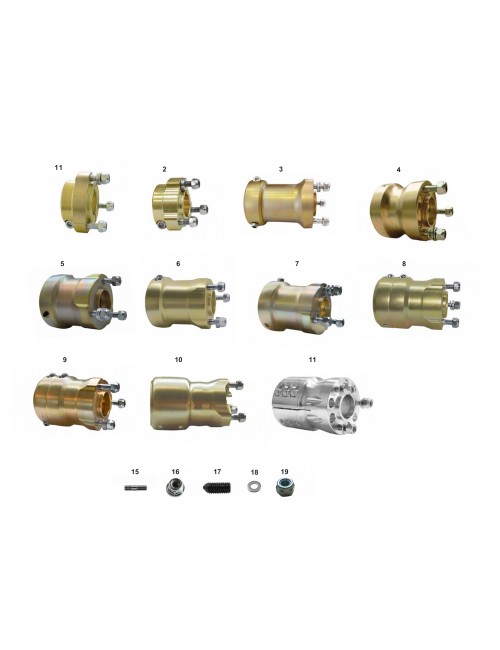
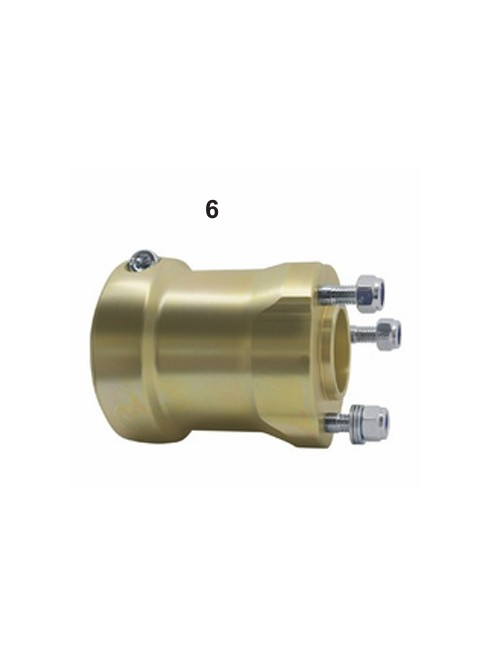
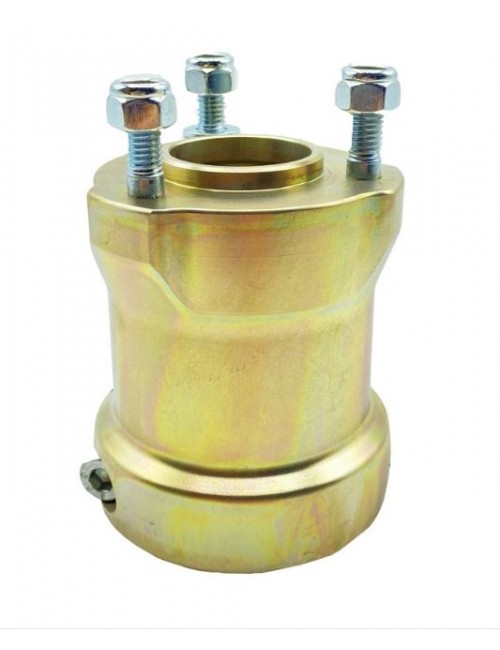
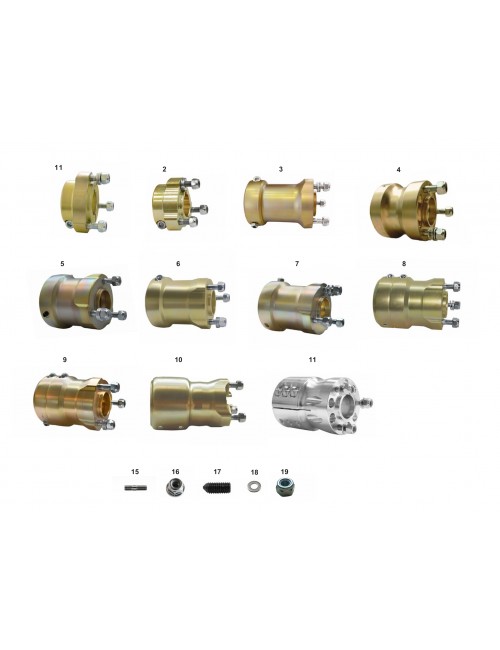
Front hub L.50mm Full...
€34.99
| Specification | Technical details |
| Part type | Cylindrical Clearing Nut for Collete / Bride |
| Inner thread | M8 (Not standard metric) |
| Outdoor diameter | Ø 13 mm |
| Tightening | Internal hexagonal / hexagon (BTR) |
| Material | High mechanical strength steel |
| Surface treatment | White Zinc (Excellent Anti-Corrosion Protection) |
| Main application | Tightening rear hubs and crown carriers on 30, 40 or 50 mm shaft |
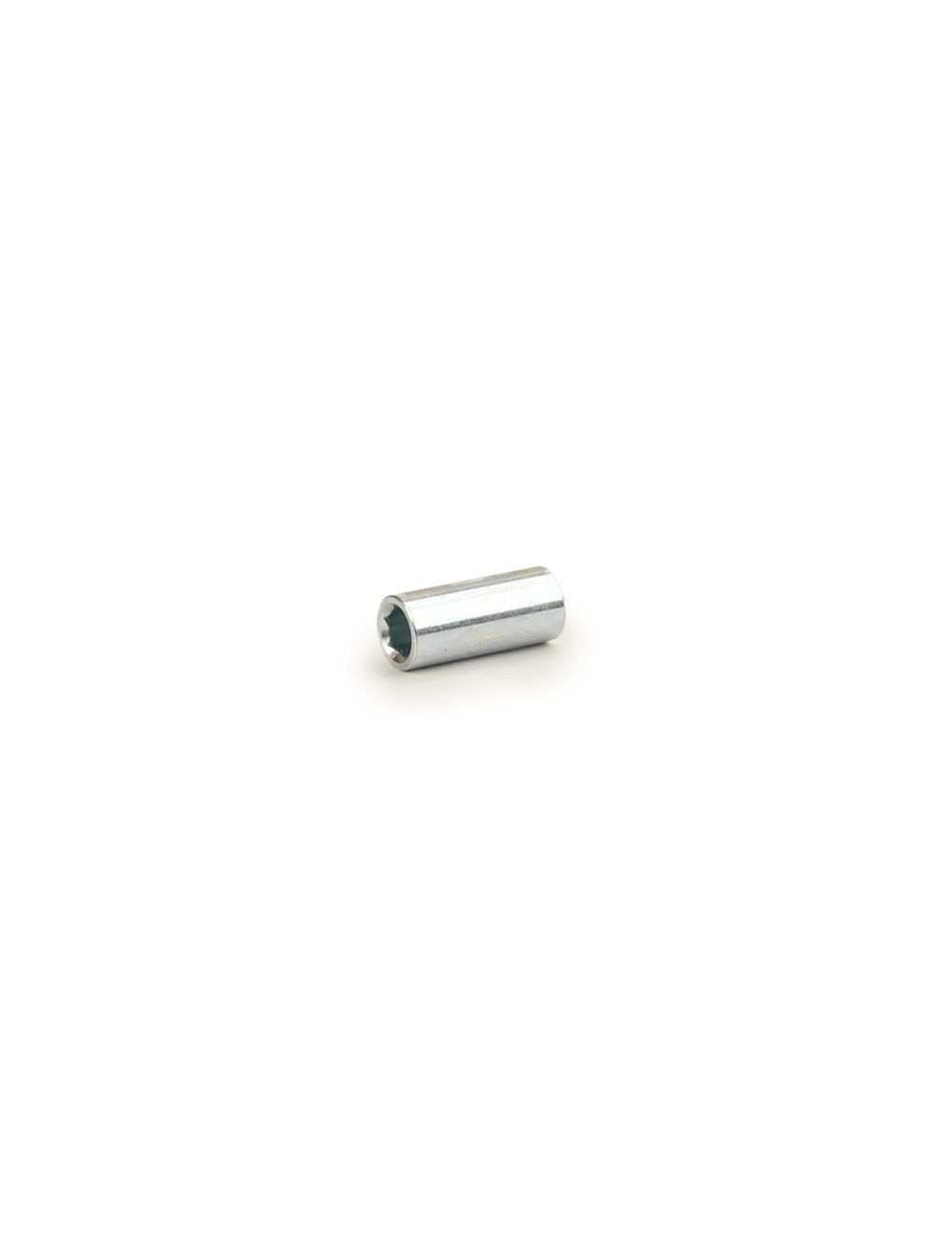
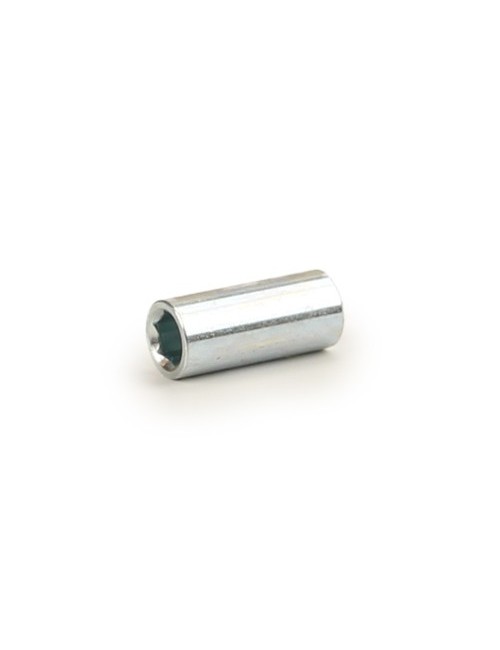
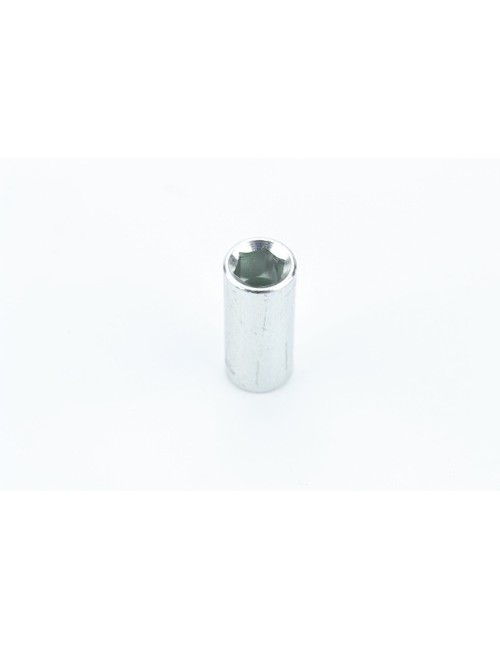
Ensure a perfect and secure blockage of your roller trains with theM8 cylindrical nut of outer diameter 13 mm. This specific technical hardware piece is essential for mounting the clamping flanges of your rear wheel hubs, your crown carriers or your disk holders on the axis of your karting.
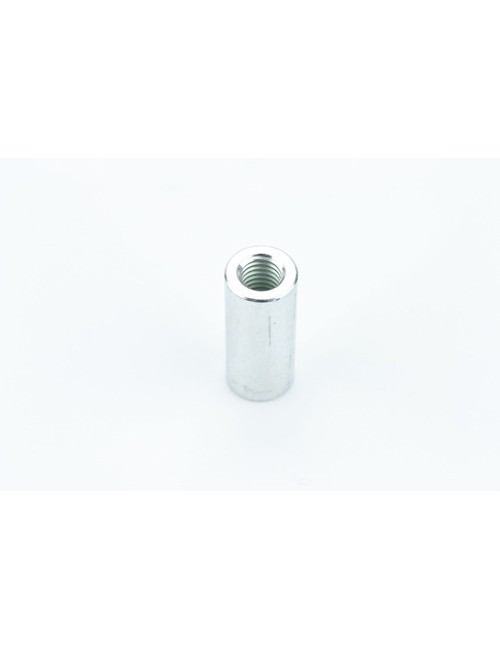
As illustrates the reference picture 6195.jpg, This nut is distinguished by its perfectly smooth tubular shape outside. Its 13 mm calibrated diameter allows it to fit ideally in the cylindrical masks and cylinders of your aluminum or magnesium parts, thus avoiding using a standard hex nut that would require a bulky socket. Thanks to his internal hexagonal imprint (six hollow sides), the tightening is done directly from the inside using an Allen key (BTR). This design eliminates any disgraceful or dangerous screw overrun, while optimizing the distribution of the pressure force around the back tree.
* "Hi Mechanical tightening! This 13mm m8 cylindrical nut is the small classic one finds on the vast majority of the rear hubs and crown carriers of the market. Its strength is to lodge directly in the body of the room for a super clean look, as we can see on the file 6195.jpg.
My obligatory trick of old paddocks for this hardware: the brush shot and tightening by hand !
In pre-grid or in test session, the rearway width is often changed, which means we spend our time loosening and tightening these nuts. Ban the shock wrench (striper) ! If you force bias to the screwdriver on the steel internal impression, you will make the hollow six-popes. Once the key turns crazy inside, good luck to disassemble your hub without drilling ...
Always work by hand with a top quality BTR key (not worn). Before engaging the M8 male screw in the cylindrical nut, make sure there are no chocks of gravel or platelet dust stuck at the bottom of the 13 mm housing. A small drop of copper grease or light lubricant on the net of the screw will avoid thermal seizure and will allow you to disassemble your wheels in two seconds, even under the heat wave! "*
Put the kart on its track trolley. Remove the brake dust and gum debris around the hub flange or crown holder using brake cleaner.
Slip the cylindrical nut M8 from Ø 13 mm (shown on the image 6195.jpg) in its dedicated bore. Orient the hexagonal footprint outwards to be able to insert your tool.
Present the M8 male screw by the opposite side of the flange. Progress the first net lathes gently to hand to make sure the thread is perfectly online and does not cross.
Follow the tip in Michel: Use a manual Allen key to firmly block the assembly. This tightening will tighten the flange around your 50 mm (or 40/30 mm) back shaft to lock the piece in place before the rolling session.
Q: Is this cylindrical nut sold to the unit or kit for complete hub ?
A: This nut M8 Ø 13 mm is sold individually (1 piece). This allows you to buy the exact amount needed to replace a nut whose internal imprint has been damaged, without having to buy a complete kit. Remember to keep 2 or 3 in advance in your toolbox !
Q: On which brands of hubs can we mount this nut of 13 mm ?
A: This cylindrical nut uses standard ratings of the competition karting industry (M8 metric thread and 13 mm outer body diameter). It is compatible with the vast majority of rear wheel hubs and group wreaths OTK (Tony Kart, Kosmic ...), CRG, Sodikart, Birelart, Praga, etc. We advise you to measure the diameter of your old nut to confirm compatibility (13 mm).
Q: Should we use the net brake to block this nut on the kart ?
A: No, the use of lattice brake (Loctite type) is strongly discouraged on the hub flange screws. These parts must be adjusted very regularly on the circuit to modify the chassis settings (width of the channels). Firm and regular tightening with manual key is ample enough thanks to the mechanical friction of the flange.

The CRG Kt2 is the versatile chassis par excellence of the Italian manufacturer. Unlike the Rébec Road (more rigid), the KT2 uses a frame compound full of tubes of 30 mm in diameter. This architecture offers controlled flexibility, ideal for freeing the engine in categories without gearbox like the OK, Iame X30 or the Rotax Max.
Its geometry allows fast adaptation to all track conditions (high grip or green track "). Featuring the last components of the range CRG RacingHe combines exceptional motor skills at a surgical front train accuracy.
The CRG KT2 2026 Version Kz redefines the standards of the Queen category. While the Road Rebel (32mm) remains the choice for the tracks with very high grip, the KT2 in 30mm Has become the favorite weapon of Kz pilots looking for more agility and ease in the support changes.
For 2026, CRG Reworked the composition of chrome-molybdenum steel to provide a better response from the front train during degressive braking. This KZ version stands out for its localized structural reinforcements and its integral front / rear braking system, essential to stop the power of 50 horsepower engines
The hub of 35 mm long is considered a "short hub". In karting, The choice of hub length is a fundamental adjustment tool:
Short hub (35 mm): It offers less contact surface with the axle than models of 75 or 90 mm. This usually allows to have a "freer" behavior of the rear train, Helping the chassis to be free from curve, Ideal on tracks with a lot of grip (adhesion).
The hub of 40 mm long is often considered the "standard" or "versatile" value on adult karts equipped with a 30 mm (x30, axle, Rotax, Kz, ok). Unlike very long (75-90mm) hubs that considerably rigidify the rear, or the very short (35mm) that fully freed the chassis, the 40 mm Offers neutral and healthy behavior, ideal for starting a setting session before refining.
The hub of 85 mm is a "long" adjustment room. In karting, the choice of the hub length is directly related to the leverage exercised on the axle:
Stability and Grip: With 85 mm, you increase the rigidity of the rear train and removing the load outward. This is the ideal tool for more moving output output or to expand your back path without stacking spacers (which weakens the assembly).
R2.0 version: This name indicates an evolution of design at CRG (best machining, optimized weight and anodized finish "Gold" for higher resistance to corrosion).
The 95 mm in magnesium is an extreme room. This is not comfortable equipment, it is a precision tool for high-level drivers (KZ, OK, X30 senior categories).
The hub of 95 mm is one of the longest models available in the range CRG. In karting, the length of the hub is directly correlated to the "lever arm" applied to the axle:
Deported support: With 95 mm, you drop the load of the wheel outwardly. This helps to charge the rear train in support more, ideal for tracks where you miss moving out of turn.
Aluminum rigidity: Unlike magnesium, this aluminum version offers high structural stiffness and excellent durability, while being easier to maintain and less sensitive to oxidation. Finishing Gold (anodized) effectively protects the part against premature wear.
The 105 mm in magnesium is a high competition room. This is not a basic setting, it is a specific solution for specific needs:
Maximum lever arm: With 105 mm, you drop the load outward to load the outer rear tire. It is the absolute weapon when the kart is sorely lacking on the turn out of turn.
System "2 screws": In a length of 105 mm, a one-screw tightening would be insufficient and would create an imbalance. The system to 2 screws Allows you to distribute the tightening force over the entire length of the ring, ensuring a perfect maintenance on the axle without creating a single voltage point.
Magnesium (mg): It offers valuable weight gain on non-suspended masses and thermal dissipation that stabilizes the pressure of your tires during long finals.
Ensure a perfect and secure blockage of your roller trains with theM8 cylindrical nut of outer diameter 13 mm. This specific technical hardware piece is essential for mounting the clamping flanges of your rear wheel hubs, your crown carriers or your disk holders on the axis of your karting.
As illustrates the reference picture 6195.jpgThis nut is distinguished by its perfectly smooth tubular shape outside. Its 13 mm calibrated diameter allows it to fit ideally in the cylindrical masks and cylinders of your aluminum or magnesium parts, thus avoiding using a standard hex nut that would require a bulky socket. Thanks to his Internal hexagonal imprint (six hollow sides), the tightening is done directly from the inside using an Allen key (BTR). This design eliminates any disgraceful or dangerous screw overrun, while optimizing the distribution of the pressure force around the back tree.
Product Comments
Your review appreciation cannot be sent
Report comment
Report sent
Your report cannot be sent