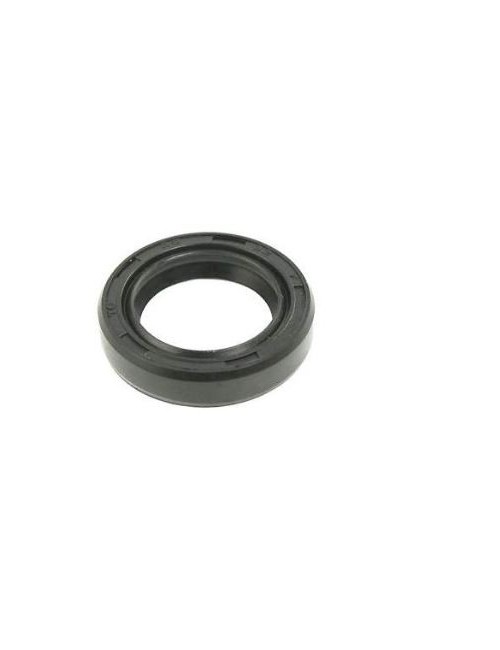
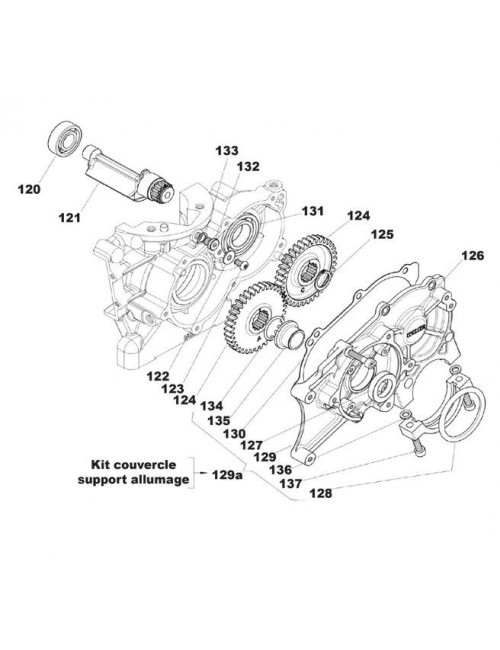
The spi joint 22x32x7 X30 drive housing (reference IAME n°127 on the broken view) is a seal mounted on the Training unit Engine IAME X30, i.e. on the side where the transmission is located (clutch and starter). This joint belongs to the new case model used on recent X30s.
Function of the spie joint
This joint ensures thatsealing between the engine housing and drive shaft (the axis that receives the clutch bell).
It prevents:
- on oil or grease leaks outwards of the engine,
- andinlet air In the engine crankcase.
In a two-stroke engine like the X30, the crankcase is used for the pre-compression of the air-gasoline mixture. The slightest passage of parasitic air changes internal pressure, disrupting fuel dosing and affecting engine performance.
The spi joint therefore maintains the correct pressure in the crankcase and ensures the reliability of the operating cycle.
Location and characteristics
- Dimensions 22 mm (inner diameter) × 32 mm (outside) × 7 mm (thickness).
- Position : on the Training unit, around the tree that causes clutching.
- Material : nitrile or viton rubber with internal spring to ensure constant tension on the shaft.
- The mounting direction is essential: the lip and spring must be oriented Inwards the engine, to hold the internal pressure.
Wear or leakage symptoms
- Presence of oil or mixture around the clutch bell,
- Irregular or difficult to adjust motor,
- Mixture too poor due to unmeasured air aspiration.
A worn spi joint can cause a significant loss of performance or even a tightening if it changes the air to gasoline ratio too much.
The spi joint 22x32x7 is therefore a small piece, but indispensable to preserve the primary compression, cleanliness and longevity X30 engine. It is one of the key components of the general sealing of the lower engine, as well as the crankshaft spi joints.
 Français
 English
 Deutsch
 Espagnol
 Italiano
 Portuguès
 ελληνικά



Product Comments
Your review appreciation cannot be sent
Report comment
Report sent
Your report cannot be sent