 Français
 English
 Deutsch
 Espagnol
 Italiano
 Portuguès
 ελληνικά

| Specification | Technical details |
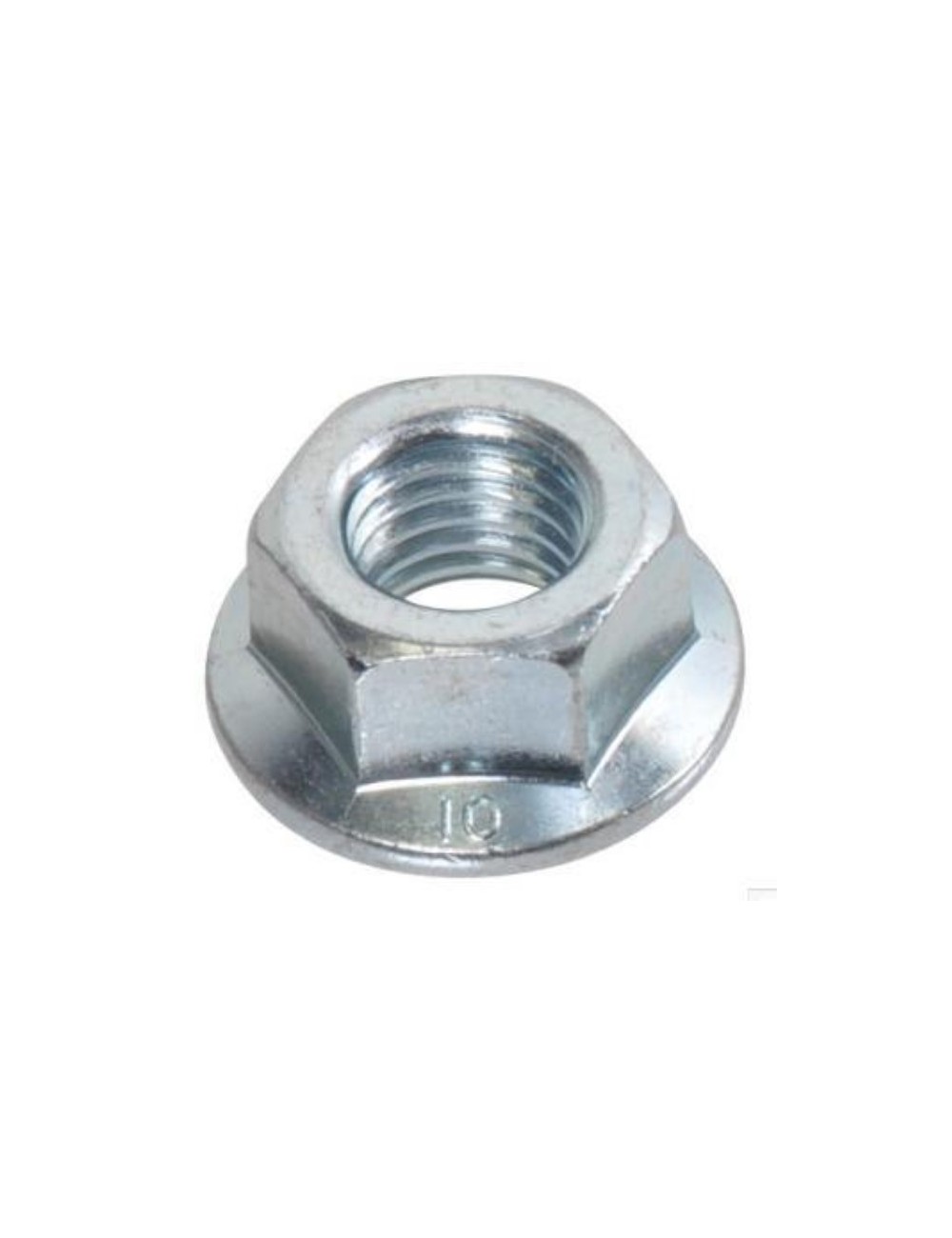
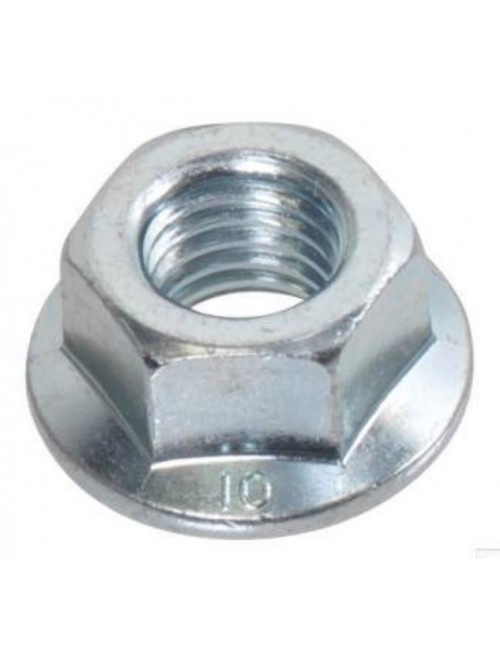
| Product type | Cylinder/bottom flange (integrated flange) |
| Mark | Tm kart (Original TM Racing Genuine Parts) |
| Thread | M8 (Not standard M8x1,25) |
| Key size (imprint) | Ch12 (12 mm key) |
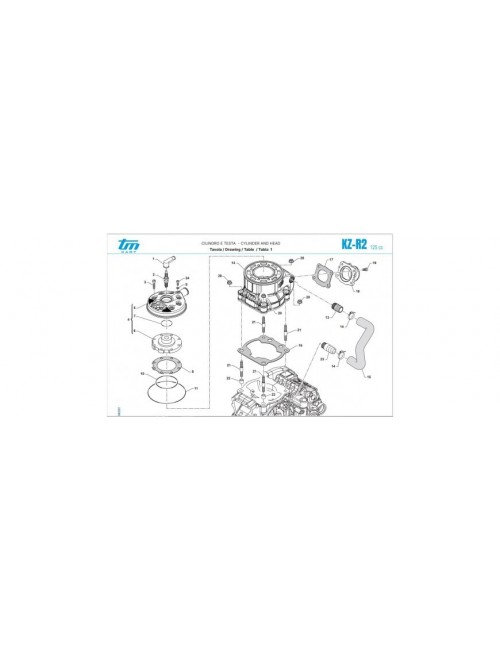
| Exploded view | Piece n ° 20 (Tavola 1 / Table 1 - Cylinder and Head) |
| Main application | Clamping cylinder base studs and cylinder head |
| Motor compatibility | TM KART KZ-R3 (Total Black & Standard), KZ-R2, KZ-R1, KZ10C, KZ10B, KZ10 ... |
| Technical avatange | Wide base for an ideal distribution of the tightening torque |
Guarantee the absolute maintenance of your high-engine thanks to theOriginal TM KART CH12 Cylinder Cylinder Nut. Essential Assembly Part on Italian Trademark Competition Engines, this reinforced nut ensures the locking of your cylinder on the motor housings as well as the closing of your cylinder head.
On the official Exploded View (Tavola 1 - Cylinder and Engine Head KZ-R3 Total Black), this nut carries the landmark n ° 20. Its integrated-specific base (enlarged flange) allows to spread the clamping pressure in a perfectly uniform manner around the stud (marker 21), avoiding crushing or marking the aluminum range of the cylinder (marker 12) or the Cylinder head. Footprint CH12 (12 mm key) offers an excellent grip for your torque tools during high-engine revision operations.
* "Hi the mechanos! The nut n ° 20 of the exploded view, it is the m8 nut with 12 mm base that plates your cylinder R3 against the bottom-engine and closes your cylinder head. As the cylinder heats and undergoes a huge thrust each Explosion, these nuts work enormously in extension.
My stand trick for a perfect and deformation cylinder tightening: cross tightening at torque wrench !
When you go up your cylinder or your cylinder head with these new M8 nuts, never tighten them blind with a flat key to PIF. First approach the 4 hand nuts, then apply the tightening torque advocated by TM Kart (usually around 22 to 24 nm) in stroke (in x) and in 2 or 3 progressive passes (for example 12 nm, 18 nm then 24 nm).
This ensures that the base joint (marker 16) crashes 100% homogeneously and that your Nicasil shirt is not twisting. A set of new base nuts and a tightening to the torque is the key to preserve your high-engine! "*
Carefully clean the thread of the base studs (marker 21) attached to your low-engine housings using a brush and brake cleaner.
Insert the base gasket (marker 16) and the cylinder (marker 12). Screw the M8 nuts with CH12 base (marker 20) by hand on each stud.
Follow the trick in Michel: using a 12 mm socket on torque wrench, tighten the crosses until reaching the torque value recommended by TM (about 22-24 nm).
Check that the cylinder is perfectly plated on the housings and no space appears at the seal plane. Your high-engine is locked !
Q: Which component of the kz-r3 exploded view corresponds exactly this nut n ° 20 ?
A: On the TM Kart Technique Plate (Tavola 1 / Cylinder and Head), the Landmark no. 20 designates the 12 mm (CH 12) m8 (CH 12) nut nuts that come to screw on the studs (N ° 21) for blocking the cylinder (# 12) on the bottom-motor.
Q: Does this nut require an extra washer during assembly ?
A: Not. The specificity of this original nut is to directly integrate its own enlarged base / flange machined under the body of the nut. She plays the role of washer by perfectly spreading the clamping stress on the aluminum flange of the cylinder.
Q: Does this m8 CH12 nut suitable for previous generations of TM engines ?
A: Yes I do. The CH12 Footprint M8 / Cylinder Hollar nuts are the historic standard of TM Kart. They adapt perfectly on the KZ10, KZ10B, KZ10C, KZ-R1, KZ-R2 and KZ-R3 blocks perfectly.

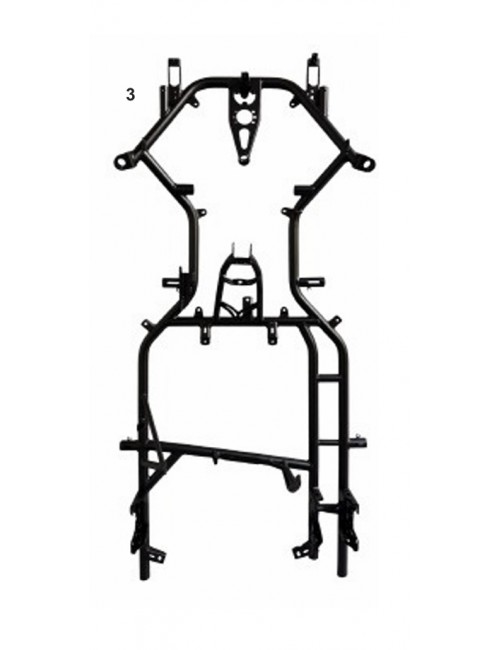
The CRG Kt2 is the versatile chassis par excellence of the Italian manufacturer. Unlike the Rébec Road (more rigid), the KT2 uses a frame compound full of tubes of 30 mm in diameter. This architecture offers controlled flexibility, ideal for freeing the engine in categories without gearbox like the OK, Iame X30 or the Rotax Max.
Its geometry allows fast adaptation to all track conditions (high grip or green track "). Featuring the last components of the range CRG RacingHe combines exceptional motor skills at a surgical front train accuracy.
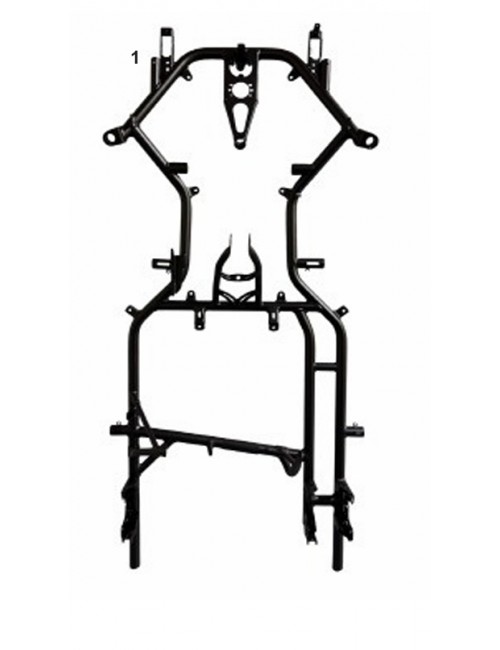
The CRG KT2 2026 Version Kz redefines the standards of the Queen category. While the Road Rebel (32mm) remains the choice for the tracks with very high grip, the KT2 in 30mm Has become the favorite weapon of Kz pilots looking for more agility and ease in the support changes.
For 2026, CRG Reworked the composition of chrome-molybdenum steel to provide a better response from the front train during degressive braking. This KZ version stands out for its localized structural reinforcements and its integral front / rear braking system, essential to stop the power of 50 horsepower engines
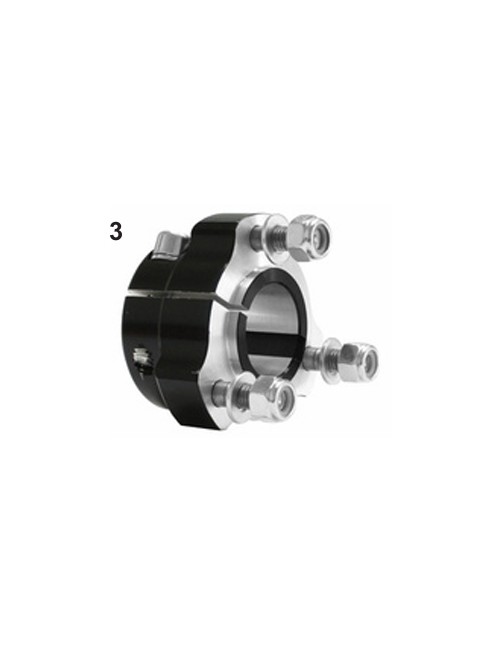
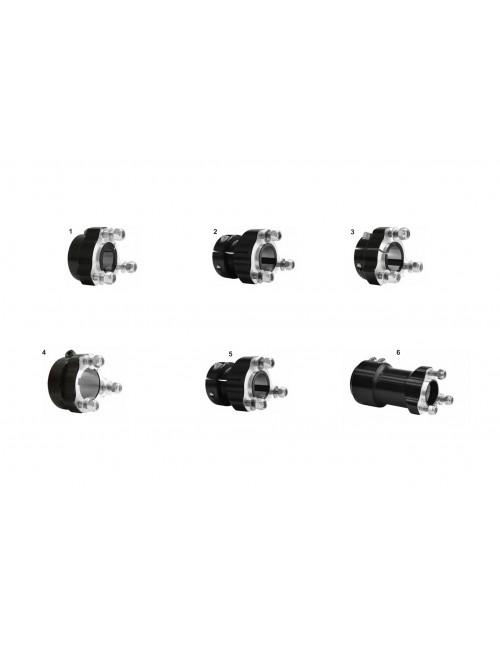
The hub of 35 mm long is considered a "short hub". In karting, The choice of hub length is a fundamental adjustment tool:
Short hub (35 mm): It offers less contact surface with the axle than models of 75 or 90 mm. This usually allows to have a "freer" behavior of the rear train, Helping the chassis to be free from curve, Ideal on tracks with a lot of grip (adhesion).
The hub of 40 mm long is often considered the "standard" or "versatile" value on adult karts equipped with a 30 mm (x30, axle, Rotax, Kz, ok). Unlike very long (75-90mm) hubs that considerably rigidify the rear, or the very short (35mm) that fully freed the chassis, the 40 mm Offers neutral and healthy behavior, ideal for starting a setting session before refining.
The hub of 85 mm is a "long" adjustment room. In karting, the choice of the hub length is directly related to the leverage exercised on the axle:
Stability and Grip: With 85 mm, you increase the rigidity of the rear train and removing the load outward. This is the ideal tool for more moving output output or to expand your back path without stacking spacers (which weakens the assembly).
R2.0 version: This name indicates an evolution of design at CRG (best machining, optimized weight and anodized finish "Gold" for higher resistance to corrosion).
The 95 mm in magnesium is an extreme room. This is not comfortable equipment, it is a precision tool for high-level drivers (KZ, OK, X30 senior categories).
The hub of 95 mm is one of the longest models available in the range CRG. In karting, the length of the hub is directly correlated to the "lever arm" applied to the axle:
Deported support: With 95 mm, you drop the load of the wheel outwardly. This helps to charge the rear train in support more, ideal for tracks where you miss moving out of turn.
Aluminum rigidity: Unlike magnesium, this aluminum version offers high structural stiffness and excellent durability, while being easier to maintain and less sensitive to oxidation. Finishing Gold (anodized) effectively protects the part against premature wear.
The 105 mm in magnesium is a high competition room. This is not a basic setting, it is a specific solution for specific needs:
Maximum lever arm: With 105 mm, you drop the load outward to load the outer rear tire. It is the absolute weapon when the kart is sorely lacking on the turn out of turn.
System "2 screws": In a length of 105 mm, a one-screw tightening would be insufficient and would create an imbalance. The system to 2 screws Allows you to distribute the tightening force over the entire length of the ring, ensuring a perfect maintenance on the axle without creating a single voltage point.
Magnesium (mg): It offers valuable weight gain on non-suspended masses and thermal dissipation that stabilizes the pressure of your tires during long finals.
Guarantee the absolute maintenance of your high-engine thanks to theOriginal TM KART CH12 Cylinder Cylinder Nut. Essential Assembly Part on Italian Trademark Competition Engines, this reinforced nut ensures the locking of your cylinder on the motor housings as well as the closing of your cylinder head.
On the Official Exploded View (Tavola 1 - Cylinder and Engine Head KZ-R3 Total Black), this nut carries the Landmark n ° 20. Its integrated-specific base (enlarged flange) allows to spread the clamping pressure in a perfectly uniform manner around the stud (marker 21), avoiding crushing or marking the aluminum range of the cylinder (marker 12) or the Cylinder head. Footprint CH12 (12 mm key) Offers an excellent grip for your torque tools during high-engine revision operations.

Product Comments
Your review appreciation cannot be sent
Report comment
Report sent
Your report cannot be sent